Eyes on the harvest. Gulf to global.
NAVCOR observes, documents, and certifies U.S. agricultural commodities in motion — vessel loading on the U.S. Gulf Coast, discharge and delivery surveys across more than forty countries, and the logistics in between.
Observation is not a side business. It is the business.
NAVCOR was built around a single discipline: independent observation of agricultural cargo. Not one service line among many — the entire company.
We are the verification layer between programs and the destinations their commodities are bound for. We observe, document, and oversee the movement of U.S. agricultural commodities — at the loading port, on the vessel, and at the international point of discharge.
Trust is earned through documentation, not declaration. Every claim we make is backed by a record: timestamped photographs, daily worksheets, loading certificates, discharge surveys, and audit trails built into every stage of the work.
December 2025 — USDA's Agricultural Marketing Service selected NAVCOR as a prime contractor for vessel loading & unloading observation services. Read the announcement
Eyes on the cargo.
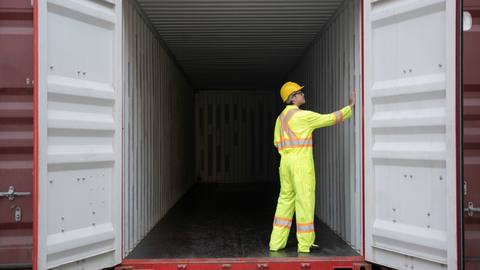
Vessel observation is core, not adjacent. From pre-load hold inspection to the final delivery survey, a credentialed observer stands where the cargo moves.
Verify everything.
Temperature logs, damage counts, chain-of-custody records, document sets. What we said happened, actually happened — and the file proves it.
Move forward.
New technology, new processes, new standards of proof — adopted early, proven in the field, and shared with the partners we deliver alongside.
Four service lines. One standard of proof.
Observation is the flagship. Around it: prepositioning warehousing, third-party logistics, and program advisory — held under a single accountable structure, so programs and the trade deal with one party, one record, one standard.

Vessel Loading & Unloading Observation
Independent berth-side observation of commodity loading and discharge — and the full record that proves it: daily worksheets, loading certificates, sampling, and two-stage discharge surveys. Bulk, bagged, and breakbulk, at U.S. ports and across 40+ countries.
Prepositioning & Warehousing
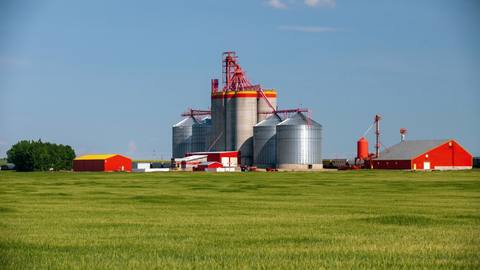
Readiness capacity at U.S. ports: food-grade, USDA-licensable warehousing — ambient and temperature-controlled — with lot-level traceability and export staging, activated on notice.
Third-Party Logistics
Drayage to deep-water berths, container and railcar handling, and export staging — every movement priced per move and closed out on the record.

Advisory Services
Operating models, process guides, and training for federal food-assistance programs — advisory from the team that runs the field work.
Documented, not declared.
Six steps, every booking, no exceptions. Built to federal program standards and applied to every engagement — this is why our certificates hold up under audit.
Arrival & access
A credentialed observer checks in at the berth — arrival logged, PPE and access protocols recorded. If access is restricted, that becomes part of the record too.
Continuous observation
Every loading day observed. Damaged units counted and classified by category, metric tons logged per day, recouped cargo tracked at the pier. Multiple observers roll up to one booking record.
Evidence capture
Timestamped photography of cargo condition — who took it, where, against which booking, and when. Evidence is filed as it is taken, not at the end of the week.
Daily worksheet
A daily cargo damage worksheet filed for every loading day, on the official USDA form family.
Form KC-41Loading certificate
Issued when the booking completes and aggregate tonnage matches the purchase order. Delivered to carrier and forwarder on a defined clock — contracting office copied.
Form KC-44 · On the clockDischarge & delivery survey
Two-stage at the port of discharge: a preliminary survey after discharge, and a final survey once damage reports and outturn weighbridge records reconcile.
Form KC-334 · Two-stageWhen a port authority, weather, or local restriction blocks full observation, we file a structured limited-observation record: time on site, extent observed, who restricted access and why, and the conditions on the ground. An honest record beats a hopeful one.
Every observation. Every certificate. Accounted for.
NAVCOR Observer is the operations system NAVCOR's own program office and field teams use on every booking — one shared, audit-ready record of every shipment observed, every certificate issued, and every incident escalated on the clock.
- One record per shipment, shared by everyone. Program managers, field teams, and oversight see the same numbers at the same time.
- Evidence visible the moment it's taken. Timestamped field photos reach stakeholders in near real time — visible before the observer leaves the berth.
- Escalation on a live clock. Significant exceptions run a structured notification chain against a defined window — provable, not promised.
One coast of origin. 40+ countries of coverage.
From the U.S. Gulf Coast to ports of discharge across four continents — observation coverage that runs the whole route, not one node.
New Orleans · Houston · Galveston · Mobile · Lake Charles · Corpus Christi
Dakar · Nouakchott · Douala · Matadi · Djibouti · Mombasa · Dar es Salaam · Beira · Nacala · Maputo · Port Qasim · Karachi · Chattogram · Colombo · Port-au-Prince · Cap-Haïtien · Barranquilla · Guayaquil
Representative ports shown · Coverage follows program requirements
Built to the standard federal programs demand.
Specialist, not generalist.
Agricultural observation is the whole business. The senior people, the process, and the technology all point at one job — and it shows in the record.
Evidence, not adjectives.
No "world-leading." No empty superlatives. Our credentials are public record — registered identifiers, official form families — and every operational claim traces to a document.
Live, on the record.
Stakeholders see evidence as it is captured, escalations as they run, and certificates as they are delivered — while the cargo is still moving.
Every shipment observed. Every certificate accountable.
Put eyes on your cargo.
Tell us the program, the port, and the laycan. We will tell you exactly how it will be observed, documented, and certified.