Four service lines. One standard of proof.
Observation is the flagship. Around it: prepositioning warehousing, third-party logistics, and program advisory — every line run on the same discipline: a credentialed presence where the cargo moves, evidence filed as it is taken, and a record that holds up under audit.
Service lines

Vessel Loading & Unloading Observation (VLUO)
The discipline NAVCOR was built on: independent, berth-side observation of agricultural commodity loading and discharge — bulk, bagged, and breakbulk — at U.S. ports and at destinations across more than forty countries.
Every booking runs the full record standard: pre-load hold inspection, continuous loading-day coverage, daily worksheets, loading certificates reconciled to the purchase order, and two-stage discharge surveys — all instrumented on NAVCOR Observer™.
Five disciplines, one booking record — what "observation" actually means when NAVCOR is on the berth.
Berth-side observation
Every loading day observed; damaged units counted, classified, and recouped at the pier.
Container & railcar observation
Stuffing observation, seal integrity, and origin condition — before cargo disappears into the system.
Breakbulk & bagged monitoring
Unit-level count and condition, with salvage and recouping documented as they happen.
Sampling & damage documentation
Representative sampling with chain of custody, normalized per unit loaded.
Discharge & delivery surveys
Two-stage surveys at the port of discharge, closed once outturn records reconcile.
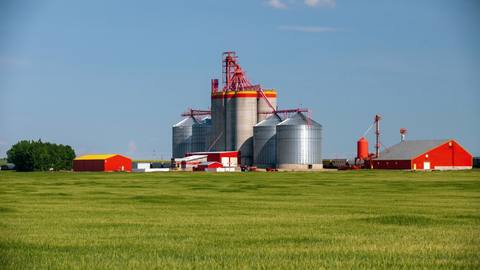
Prepositioning & Warehousing
Readiness capacity, not just space: food-grade, USDA-licensable warehousing at U.S. ports — ambient and temperature-controlled — holding commodities positioned for rapid deployment.
Rail- and truck-served receipt, racked storage with lot-level traceability, export staging to deep-water berths, and specialized support — repackaging, reconstitution, fumigation, damaged-cargo segregation — activated on notice, so programs never pay to hold idle space.
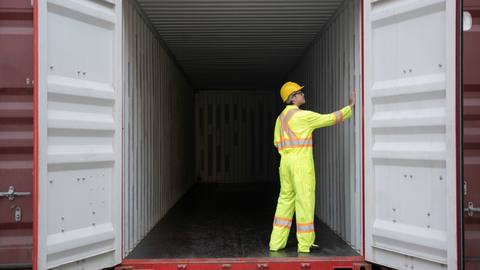
Third-Party Logistics
Movement, priced and documented per move: drayage to deep-water ports, container and railcar handling, trailer loading, and export staging for agricultural programs.
Every movement is booked, executed, and closed out under the same documentation discipline as the observation work — one record from the warehouse floor to the vessel position.

Advisory Services
Program and supply-chain advisory for federal food-assistance operations — from the team that runs the field work, not just writes about it.
Operating-model design, process guides and playbooks, commodity and geography analysis, governance and reporting frameworks, and staff training with structured handover — delivered embedded with program staff, where the work happens.
Commitments are set per program. And kept.
Delivery windows and form families vary by program and contract. What never varies: every engagement starts with defined commitments, and every commitment is tracked live against the record.
On the clock.
Under our federal observation programs, loading certificates reach the carrier and forwarder within a 24-hour window of booking completion. Every engagement — federal or commercial — gets a delivery window defined up front and tracked to the minute.
With a stopwatch.
Significant incidents under our federal programs run a structured two-hour notification chain. Commercial engagements get the same machinery, tuned to the program's needs — escalation that is provable, not promised.
Seamless, end to end.
One accountable party from pre-load inspection to final delivery survey. Programs deal with one record and one standard — and the handoffs between port, vessel, and destination happen inside our system, not in their inbox.
Scope it with us.
Tell us the program, the port, and the laycan. We will tell you exactly how it will be observed, documented, and certified.